Australian Mental Health Take Over
Pilot Zero • August 2026

Applying the Principles of Physical Safety to Psychosocial Hazard Control.

Real Training • Real Community • Real Verification

AMHTO exists to identify, eliminate and control psychosocial hazards before they contribute to injury, workforce instability, workforce loss or crisis.
Serious psychological claims have grown 161% in a decade — the largest increase of any injury category. The median claim is 35.7 weeks away from work, and only around half of affected workers are back at work within twelve months. Source: Safe Work Australia, Key Work Health and Safety Statistics Australia 2025.
AMHTO was developed to operate before workers reach that point.

AMHTO is an operational workforce training and stabilisation framework. We build the accommodation, workshops and operational environments where people stabilise, train, work and grow before transitioning into external employment and client worksites.
Many regional communities face reduced access to training, transport, stable employment pathways and workforce development opportunities.

1.8×
Community Multiplier
10+
Funding Portfolios
P0
Pilot Zero • August 2026
AMHTO Workforce Training

AMHTO is a proposed upstream psychosocial hazard control system, designed for independent verification under Australia’s work health and safety framework.

AMHTO — the Australian Mental Health Take Over — does not take over the treatment of mental ill-health. It takes over the conditions in which decline occurs. The environment is the intervention — and the work is what builds it. The team, the atmosphere and the shared undertaking of real projects are the mechanism. That is why AMHTO makes no clinical claim. It doesn’t need one.

The Gap

Industry has become highly effective at managing workers while they are at work.
Many of the conditions contributing to workforce instability, psychosocial injury, housing instability, disengagement and workforce loss develop away from the workplace, between rotations, where structured controls are often absent.
AMHTO was developed to operate in that gap

AMHTO Operations
The systems exist.
The outcomes don't.
AMHTO was built to bring these elements together within a single operational environment.

Why AMHTO Exists

AMHTO was built to address a gap that continues to exist between psychosocial hazard identification and workforce loss.

A gap where support exists, but the environment needed for stability often does not.

Housing is somewhere else.
Training is somewhere else.
Employment is somewhere else.
Transport is somewhere else.
Support is somewhere else.
The individual is expected to hold it all together alone.

AMHTO was built to bring those pieces together.

Why Industry Is Paying Attention

Industry has become highly effective at managing workers while they are at work.

Many of the conditions contributing to workforce instability develop away from the workplace.

Housing instability. Isolation. Burnout. Workforce disconnection. Relationship breakdown. Substance misuse.

These factors influence attendance, performance, workforce participation and long-term workforce capability.

Across Australia, employers are increasingly recognising psychosocial hazards as a workforce and safety issue.

This is not a wellbeing discussion.

This is a risk-control discussion.

The question is no longer whether these hazards exist.

The question is what controls are in place before instability becomes crisis.

Industry Already Understands The Hierarchy Of Control

Hierarchy of Control Diagram

Industry already understands the Hierarchy of Controls.

When a hazard is identified, the objective is not simply to respond to the outcome. The objective is to reduce exposure to the hazard wherever possible.

This approach has been successfully applied across mining, construction, manufacturing and other high-risk industries for decades.

AMHTO applies the same thinking to psychosocial hazards, focusing on structured controls that reduce exposure before instability becomes crisis.

The principle is familiar. The application is different. The objective remains the same: reduce exposure, improve outcomes and protect people.

Right now, the last line of defence for a worker in decline between swings is a phone number — 000, Lifeline, an assistance line. Those services save lives, and AMHTO will always point to them. But in control terms, a phone number is an administrative control: it depends on the person in difficulty recognising their own state and making the call at the worst possible moment. Australia invests heavily in telling people where to call — and almost nothing in building anywhere for them to go. AMHTO exists to build what sits upstream of the call

PSYCHOSOCIAL HAZARDS VS AMHTO CONTROLS

AMHTO does not treat psychosocial hazards as isolated personal issues. It addresses the surrounding conditions that allow risk to build.

Housing Routine Connection Participation Support Accountability

What AMHTO Is Not

AMHTO is often compared to accommodation services, training providers, FIFO villages and referral programs.

While elements of those models may exist within the environment, AMHTO was not designed to operate as any one of them.

AMHTO combines housing, transport, training, mentorship, workforce participation and structured controls within a single operational framework.

AMHTO comparison diagram

Why AMHTO Is Different

Traditional Approach AMHTO

Awareness Environment

Program Infrastructure

Self-Report Observation

Administrative Controls Proposed Higher-Order Controls

Treatment Exposure Control

Individual System

What AMHTO Will Never Claim

AMHTO makes no clinical claim of any kind. It does not diagnose, treat or measure medical outcomes.

It measures attendance, participation, routine, supervision, training progression and control performance — operational indicators, monitored the way any other control is monitored.

Participation never replaces, delays or conditions any entitlement, claim or clinical care a worker is entitled to.

AMHTO changes the environment around the worker. It does not change the rights of the worker.

What AMHTO Provides

Transport from point of contact to AMHTO housing
Structured drug and alcohol-free accommodation
Daily operational routine
Mentor supervision from day one
Financial planning and stability
Documented psychosocial safety controls
Employer liaison and communication
Documented handover at mobilisation

RURAL AND REGIONAL AUSTRALIA OFTEN MISSES OUT ON OPPORTUNITY.

AMHTO IS DIRECTLY ADDRESSING THAT GAP.

Housing. Transport. Training. Workforce participation. Regional opportunity.

AMHTO brings these together inside one operational environment.

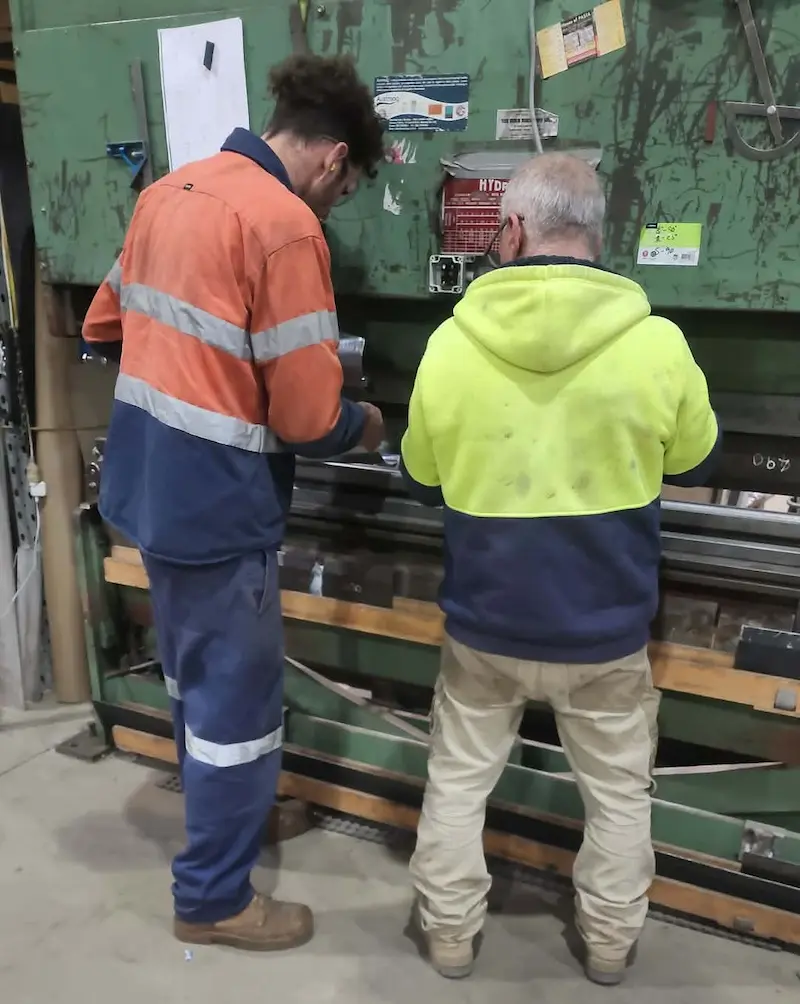
We build and operate accommodation that supports workforce participation. We remove transport barriers that prevent people from accessing work and training. We deliver accredited and non-accredited pathways inside real operational environments.

We create opportunities for young people, mature workers, veterans and regional communities to participate meaningfully in the workforce.

Crane Lift
One environment. Multiple outcomes. Stronger communities.

Known By Name

Every participant knows who their mentor is, who their team is and who they can turn to when things are not going well.

Most systems manage people as referrals, case numbers or statistics.

AMHTO is designed to keep people visible.

Through structured participation, daily engagement and the 1:7 mentor framework, individuals remain known by name, connected to community and accountable to those around them.

02

Team

Every participant belongs to a team.

03

Mentor

Every team belongs to a mentor.

04

Community

Connected to others around them.

05

Accountability

Support and responsibility remain visible.

06

Supervision

Growth follows supervision capacity.

AMHTO does not grow according to demand. It grows according to supervision capacity.

Keep people visible. Keep people connected. Keep people moving forward.

Growth Control Framework

The 1:7 mentor framework is both a governance control and a safety control designed to protect culture, participation standards and operational quality as the organisation expands.

Growth only occurs when suitably trained and vetted mentors are available to support the next stage of development.

No exceptions.

Every new mentor creates capacity for the next seven participants.

The model deliberately combines veterans, FIFO workers, tradespeople, experienced operators and people new to industry through AMHTO's Age & Experience Scaffolding Model.

Capability is transferred through participation.
Knowledge is transferred through experience.
Culture is transferred through mentorship.
1:7 Mentor Framework

The site grows only when it is safe to do so.
The culture grows with it.

THE MONEY IS ALREADY BEING SPENT.

Every police interaction, ambulance callout, emergency department admission, incarceration and crisis response represents a cost already being paid downstream.

AMHTO focuses on building capability upstream through housing, transport, training, workforce participation and operational accountability.

Fewer people reaching crisis.
More people participating in work, training and community life.

Pilot Zero runs on four audited stop/go gates. Funding is released only as each gate is passed, and nothing proceeds until every detail is complete and agreed with the independent chair and the independent auditor.

Gate 1 — Scope: IN PROGRESS

Gate 2 — Systems: continued

Gate 3 — Independent Review: NOT COMMENCED

Gate 4 — Readiness: NOT COMMENCED

The verifier is independent of AMHTO and of any funder, is not paid on a favourable finding, and publishes either way. A gate that is not passed is the process working, not failing. This tracker is updated as gates pass — or hold.

Pilot Zero

August 2026

Pilot Zero is the establishment phase.

During this stage, AMHTO will complete:

  • Governance frameworks
  • Operational staffing
  • Transport systems
  • WHS and psychosocial safety frameworks
  • Audit and compliance readiness
  • Operational infrastructure
  • Independent review and oversight

No participant intake will occur until these foundations are fully established.

Pilot Zero is not service delivery. It is the foundation on which everything that follows is built.

If you see the alignment — as a funder, employer, government body, veteran organisation, regional community or industry partner.

The systems exist. The team has been assembled. The model has been designed. Pilot Zero is where those systems are independently verified, strengthened and prepared for scale. If you see alignment with what AMHTO is building, we want to hear from you. Not to sell you something. To build something together.

Operational Outputs

Measured Outcomes. Practical Results.

AMHTO is designed to deliver measurable outcomes for participants, employers, communities and government stakeholders.

The model focuses on increasing workforce participation, strengthening capability and improving long-term workforce stability through structured environments, mentoring and accountability.

More People Participating In Work
Job-Ready Participants
Training, Tickets & Licensing Pathways
Stable Housing Environments
Reliable Transport To Work & Training
Ongoing Mentor Support
Stronger Community Connections
Improved Workforce Retention
Reduced Psychosocial Risk Exposure
Stronger Regional Workforce Capacity

These outcomes are not delivered through a single service.

They are produced through the combined effect of structured environments, participation, accountability and opportunity.

Government, Regional Development & Community Engagement

AMHTO is being developed through ongoing engagement with government representatives, regional development organisations, local councils and community stakeholders.

Industry Engagement & Supporters

Real world support by real world industry.

Investment & Partnership Opportunities

WE ARE BUILDING THE GOVERNANCE, OPERATIONAL AND FUNDING FOUNDATIONS NOW.

For investment discussions, workforce partnerships, industry engagement, community collaboration or any general enquiries regarding AMHTO, please contact us directly and the appropriate team member will respond.
info@australianmentalhealthtakeover.com.au


AMHTO is not a crisis service.
If you or someone you know needs urgent help,
call 000, or Lifeline on 13 11 14.

×